.png)

THE ACCURATE VASTU WITH REMEDIES (Part 1)


The first Purana, Matsyapurana, among the eighteen Puranas orated by Maharishi Krishandvaipayana Veda Vaysa has described the Vastu-Shastra (science of construction) or the Grahakalpasutras (formulas to make certain changes in construction).

Vastu-Shastra is a practical science of ancient times of India. It was discovered, orated and recorded by our Rishis (mystics) and Munis (sages) to make the human beings happier and more prosperous in their homes, Palaces, shops, Ashrams (holy cottages), Gurukulas (dwellings of Guru or preceptor) and Shrines (temples).

These days Vastu has become the part of our life and the whole of universe. People apply this magical science not only in their homes shops and factories but working places/offices also.

Lord Brahma is the creator of Vastu-Shastra and is called Vastu-Purusha. Before any construction; He must be adored along with Mahasaraswati (Wife of Brahma, goddess of learning), Ganesha (son of Lord Siva) and Navagrahas (Nine planets).


Gramdevta (god of the village), kshetrapala (Bhairavanatha, a demi-god), Kuldevata or Kulguru (deity or preceptor of the family) and Isthandevata (god of the land/place) should also be adored before going ahead with any construction,anywhere.
The whole universe comprises 5 Elements i.e., the Fire, Air, Sky (Vaccum), Earth and Water. The principles of Vastu are mainly dependent on the arrangements and balancing of these five elements in their proper order and proportions so that the dwellers could have better living conditions in a place in which they live, work or worship.
Vastu also keeps in view the effects of light and heat (rays of the Sun), direction of the Air, magnetic field of the Earth, proper place of the Water and right path for the Sky. Thus Vastu is nothing except a science and method of balancing of the 5 elements for progress, peace, harmony and happiness of human beings in their dwellings and working places. It is hard for ordinary people to understand it fully.

5 Elements

Akash (Sky/Vaccum) - Black/Blue
Vayu (Air) - Green
Agni (Fire) - Red
Jal (Water) - White
Prithvi (Earth) - Yellow

At the time of construction of a unit, the Muhurta (auspicious time of ceremony) is also considered, especially when one enters a new house/office. One should be careful at the time of buying a plot of land. Direction and surroundings should also be considered. One ought to be very selective for keeping plants and trees in a unit. Stationary or running water, underground water tank, tube-well, wash-basin, toilets, bathrooms and septic tanks should be located at right place, in right direction, clocks and mirrors should also be fixed at proper place.
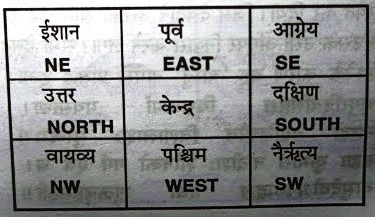
WHAT THINGS YOU NEED AT THE TIME OF BHOOMI POOJAN?
These are the things you need for Bhoomi Poojan-
Incense Sticks (agarbatti), Aromatic material of Fragrance (dhoop),
Camphor (kapoor), 1 Raw Coconut (sriphal),
Coloured Cotton Thread (mauli), Red Pigment (kumkum),
5 Flower Garlands (phoolmala), 1 Areca Nut (supari),
Saffron (kesar), 200 gm. Milk (doodh),
200 gm. Jaggery (gur), 200 gm. Curd (dahi),
Cotton (rui), 1 kg. Cow-Butter (goughrit),
1.25 kg. Rice (chawal), 5 Dry-Fruit (panchmeva),
1 bottle Ganga-Water (gangajal), Sweets (mithai),
1.25 meter White and 1.25 meter Red Cloth (shavet-lal vastra),
1 Big Copper Pot (tanbe ka kalash),
A Pair of silver snakes (nag-nagin ka jora),
Few Betel Leaves (pan ke patte), 1 Silver Coin (Chandi ka sikka),
Fruits (phal), 5 Digging Tools (panch auzaar); and
1.25 kg.Wheat (gehun).
Have a nice day! till next (To be Continued....)


So Concise. That's like a whole book in a Blog.
Outstanding👍🏻 ☺👌🏻